
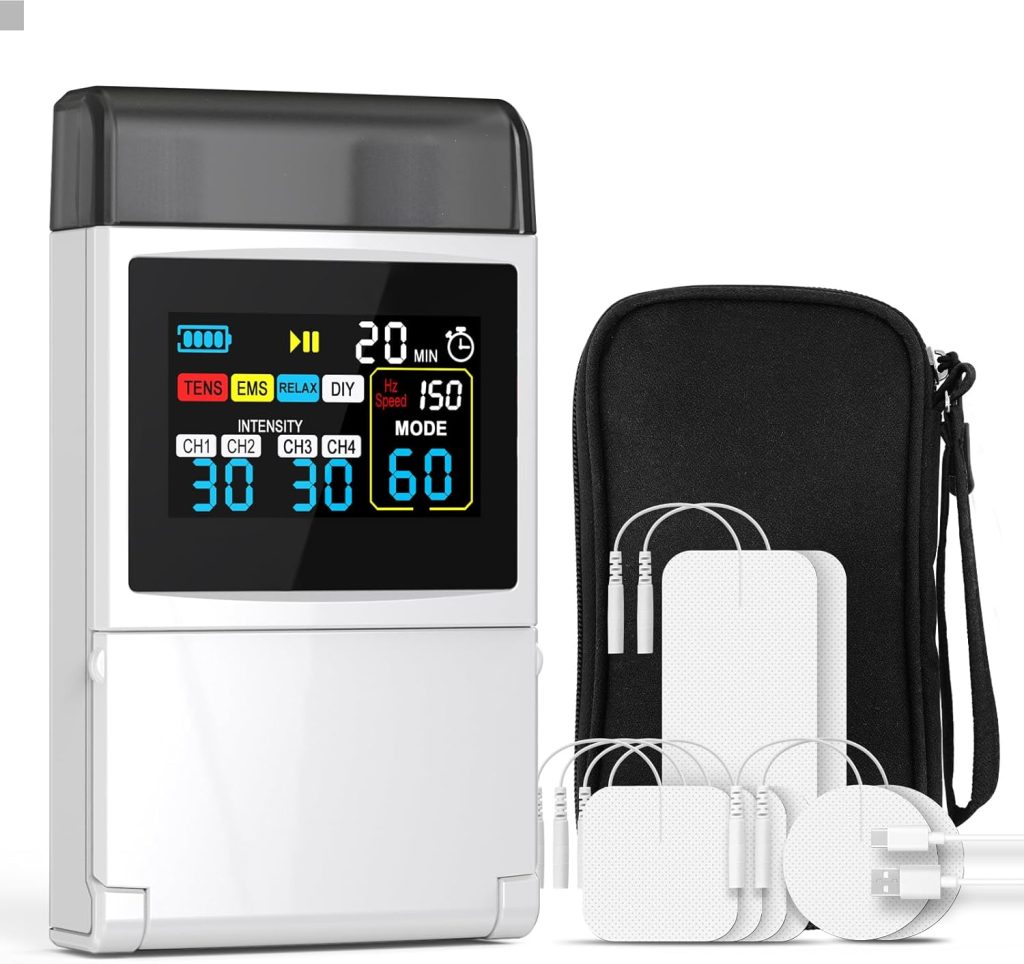
A Deep Dive into the 4-in-1 TENS and EMS Multi-Channel Stimulator
Managing chronic pain or recovering from a grueling workout often requires more than just rest. Modern recovery technology has advanced significantly, bringing professional-grade therapy into the home. The 4-in-1 TENS and EMS Muscle Stimulator represents a versatile solution for those seeking non-invasive pain management and muscle conditioning.
This post explores how this 4-channel device operates and why its multi-functional design is becoming a staple for back, neck, and sciatic relief.
Understanding the Technology: TENS vs. EMS
While they look similar, these two technologies serve distinct purposes. This device combines both, along with specialized relaxation and customizable DIY modes.
- TENS (Transcutaneous Electrical Nerve Stimulation): Focuses on pain relief. It sends low-voltage electrical pulses to the nervous system, effectively “scrambling” pain signals before they reach the brain. It also encourages the body to produce endorphins—natural painkillers.
- EMS (Electrical Muscle Stimulation): Focuses on muscle recovery and strengthening. It causes muscles to contract and relax, mimicking the effects of exercise. This is ideal for preventing muscle atrophy, increasing local blood circulation, and toning.
Key Features of the 4-Channel System
Unlike standard dual-channel units, a 4-channel system offers significantly more coverage and flexibility.
| Feature | Specification / Benefit |
| Output Channels | 4 independent channels (supports up to 8 pads simultaneously) |
| Operating Modes | 60 pre-programmed modes across TENS, EMS, and Relax |
| Intensity Levels | 30 adjustable levels for precise comfort control |
| Display | Upgraded color screen for high visibility and easy navigation |
| Customization | DIY mode allows users to set specific pulse widths and frequencies |
Targeted Relief for Complex Pain
The primary advantage of a 4-channel device is the ability to treat multiple areas at once or provide comprehensive coverage for a single large area.
Sciatica and Lower Back Pain
Sciatic pain often radiates from the lower back through the hip and down the leg. With four channels, you can place pads along the entire nerve path, providing a continuous “gate control” effect that a smaller unit simply cannot match.
Neck and Shoulder Tension
For those suffering from tension headaches or “tech neck,” the 30 intensity levels allow for a very gentle start. You can place two pads on the upper trapezius and two on the cervical base to release deep-seated knots.
Post-Workout Recovery
Using the EMS function on the quadriceps or hamstrings after a heavy session can help flush out lactic acid. The upgraded color screen makes it simple to toggle between “Massage” and “Strength” modes without fumbling with complex button sequences.
Why the Color Screen and DIY Mode Matter
Most older TENS units feature monochrome LCDs that are difficult to read in low light. The upgraded color screen provides clear icons and timers, ensuring you know exactly which mode is active and how much battery life remains.
Furthermore, the DIY Mode is a game-changer for experienced users or those working under the guidance of a physical therapist. It allows for the adjustment of specific parameters, such as:
- Pulse Rate: The frequency of the electrical pulses.
- Pulse Width: The duration of each pulse.
- Treatment Time: Precision timing for specific therapy protocols.
Safety and Best Practices
To get the most out of your device, always ensure the skin is clean and dry before applying the electrode pads. Avoid placing pads directly over the heart, on the front of the neck, or on broken skin. If you have a pacemaker or are pregnant, consult with a medical professional before use.
The 4-in-1 TENS and EMS unit is a powerful tool for anyone looking to reclaim their mobility and manage discomfort without relying solely on pharmacological interventions.