
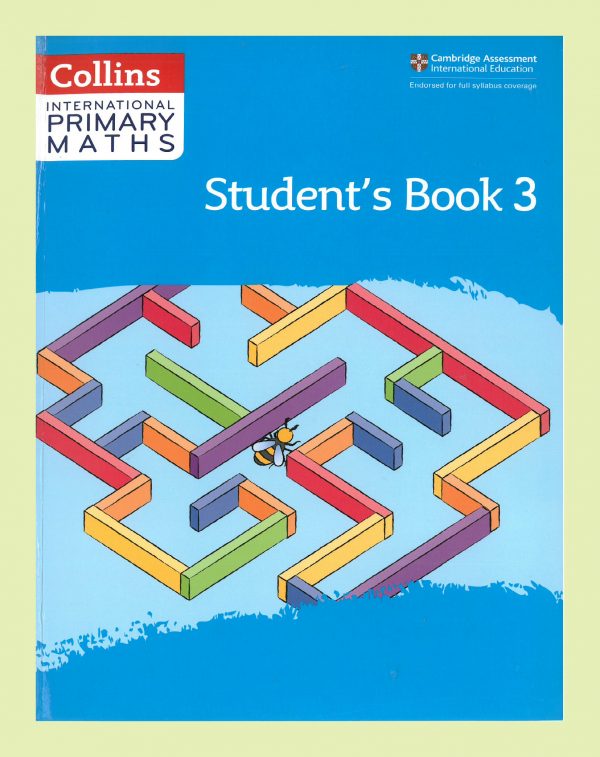
Why Cambridge Primary Books Are the Best Choice for Young Learners in 2026
In the United States, more parents are paying close attention to the quality of their children’s education than ever before. Families are no longer choosing books based only on price or popularity. They want learning materials that build real understanding, improve academic performance, and prepare children for a future that is becoming more competitive, more global, and more skill driven every year.
That is exactly why Cambridge Primary books continue to stand out in 2026.
For parents in the U.S. who want a structured, internationally respected, and academically strong learning system, Cambridge Primary books offer a reliable solution. These books are designed to help children build a solid foundation in key subjects such as English, mathematics, science, and global perspectives. More importantly, they are written in a way that supports curiosity, confidence, and long-term intellectual growth.
Whether a child is enrolled in a private school, an international school, a homeschool program, or simply needs additional academic support at home, Cambridge Primary books can provide a high-quality learning path. They are not just textbooks. They are tools that help children think better, learn better, and grow into stronger students.
Understanding What Cambridge Primary Books Offer
Cambridge Primary books are part of a globally recognized educational framework designed to support young learners during their most important developmental years. At the primary level, children are not only learning facts. They are learning how to read closely, solve problems, communicate clearly, ask thoughtful questions, and understand the world around them.
That is what makes the Cambridge approach so valuable.
Instead of pushing students to memorize information without understanding it, Cambridge materials encourage children to explore ideas, apply knowledge, and build confidence step by step. This approach matters because early academic experiences often shape how children feel about learning for many years to come.
In the U.S., many parents are now looking for educational resources that go beyond basic classroom worksheets or oversimplified review books. They want materials that challenge children in healthy ways while still being clear, organized, and age-appropriate. Cambridge Primary books meet that need exceptionally well.
Why American Parents Are Looking Beyond Traditional Learning Materials
Across the United States, many families are noticing that traditional learning materials do not always meet the needs of modern learners. Some books rely too heavily on repetition without deep understanding. Others are too rushed, too generic, or too disconnected from how children naturally learn.
Parents often see the results at home.
A child may be able to complete homework but still struggle to explain what they learned. A student may memorize math steps but feel lost when facing a new type of problem. Another child may read passages correctly but have difficulty understanding meaning, identifying key ideas, or expressing thoughts in writing.
These gaps can become more serious over time if children do not build strong academic foundations early.
Cambridge Primary books offer a stronger alternative because they are designed with both content and skill development in mind. They help students understand subjects more deeply instead of moving too quickly through disconnected material. For U.S. families who want academic rigor without confusion, that balance is extremely important.
A Strong Academic Foundation Matters More Than Ever in 2026
In 2026, education is about much more than passing a test. Students need to be prepared for a future where communication, reasoning, adaptability, and problem-solving are essential. A strong foundation in the primary years helps make that possible.
This is where Cambridge Primary books make a major difference.
These books help children strengthen the core academic areas that shape future success. English materials build reading comprehension, vocabulary, grammar, and writing ability. Mathematics materials support number sense, logic, fluency, and structured problem-solving. Science materials introduce observation, explanation, evidence, and investigation. Global perspectives materials encourage broader thinking, discussion, and awareness of the wider world.
When children develop these skills early, they are more likely to feel capable in later grades. They become less intimidated by new topics and more willing to participate, ask questions, and think independently. That kind of confidence has real value inside and outside the classroom.
Cambridge Books Support Real Understanding, Not Just Memorization
One of the biggest reasons Cambridge Primary books are such a smart choice is that they focus on understanding instead of shallow memorization.
Many children can repeat definitions or copy procedures without truly knowing what they mean. This is a common problem in education, and it often shows up later when students face more complex reading assignments, multi-step math problems, or science questions that require explanation rather than recall.
Cambridge books help reduce that problem by encouraging students to engage with ideas in meaningful ways.
In English, students are often guided to think about language, structure, tone, and meaning. In math, they are encouraged to understand how and why a method works, not just follow a formula. In science, they explore patterns, systems, and observable results rather than memorizing disconnected facts.
This kind of learning is far more durable. When children truly understand a concept, they are more likely to remember it, apply it, and build on it later. That is one of the main reasons these books are so valuable for long-term growth.
Ideal for Homeschooling Families in the United States
Homeschooling continues to grow across the U.S., and many parents are searching for academic materials they can trust. They want resources that are organized, academically sound, and flexible enough to use at home without sacrificing quality.
Cambridge Primary books are an excellent fit for this purpose.
Their structure makes it easier for parents to guide lessons, track progress, and provide consistent support. Lessons are usually presented in a logical sequence, which helps children move from one concept to the next without confusion. Practice activities reinforce learning and help parents see where their child is doing well and where extra help may be needed.
For homeschooling families, this matters a great deal.
Not every parent has formal teaching experience, but many are deeply committed to providing strong educational support. Cambridge books make that easier by offering content that is professional, accessible, and thoughtfully organized. They help parents create a learning environment that feels both structured and manageable.
Excellent for Private School, International School, and Supplemental Learning
Cambridge Primary books are not only helpful for homeschool families. They are also a strong option for students enrolled in private schools, international schools, and after-school enrichment programs.
Many U.S. families use these books to supplement school learning. A student may need stronger math practice, more advanced reading materials, or a more structured approach to science. In these cases, Cambridge books can serve as a highly effective academic support system.
They are also especially valuable for children attending international schools in the U.S. or schools that incorporate global curricula. Because Cambridge is widely respected around the world, these materials can help provide consistency and academic continuity.
Even for students in standard American school systems, Cambridge books can offer something many traditional resources do not: a more thoughtful, concept-based, and globally aware learning experience.
Clear Structure Helps Children Learn with Less Frustration
One reason young learners struggle is not because they are incapable, but because the material in front of them is poorly organized or overly confusing.
Children learn best when lessons are clearly structured, gradually developed, and presented in language they can understand.
Cambridge Primary books do this well.
The content is usually arranged in a way that supports steady progress. New ideas are introduced carefully. Examples are relevant. Activities build on prior learning. This reduces unnecessary frustration and helps children feel more secure as they move through the material.
That sense of clarity matters.
When children constantly feel confused, they may begin to believe they are not “good” at a subject. Over time, this can affect motivation and performance. But when materials are well-designed and understandable, children are more likely to stay engaged and develop a healthier relationship with learning.
Building Confidence in English, Math, and Science
Confidence is one of the most important outcomes of effective education.
A child who believes, “I can understand this,” approaches learning very differently from a child who feels anxious, behind, or overwhelmed. Cambridge Primary books help build confidence because they combine clarity, practice, and steady progression.
In English, children gain confidence by improving reading comprehension, grammar, sentence structure, vocabulary, and written expression. As they become better at understanding texts and expressing their thoughts, they often become more confident communicators overall.
In mathematics, confidence grows when children understand number patterns, operations, measurement, geometry, and reasoning strategies. Instead of fearing math, they begin to see it as something they can work through successfully.
In science, confidence comes from making observations, asking questions, understanding systems, and connecting ideas to the real world. Science becomes less intimidating when it is taught as a process of discovery rather than a list of hard facts.
This confidence carries into schoolwork, classroom participation, test performance, and even personal growth.
A Better Fit for Future-Ready Education
Today’s children will enter a world that values not only knowledge, but also flexibility, communication, research, and critical thinking. Educational materials should reflect that reality.
Cambridge Primary books are especially effective because they prepare children for more than just immediate classroom tasks. They support the broader skills students will need as they grow.
These include:
Critical thinking, which helps students evaluate information and make sense of new ideas.
Problem-solving, which helps them work through challenges in math, science, and everyday situations.
Communication, which supports strong reading, writing, speaking, and discussion.
Independence, which helps children become more self-directed learners.
Global awareness, which helps them understand that learning connects to a wider world.
For many U.S. parents, this future-focused approach is one of the strongest reasons to choose Cambridge books in 2026.
Why the Complete Learning Pack Is So Valuable
A complete Cambridge Primary learning pack offers even greater value because it gives families a full academic system instead of scattered materials from different publishers.
When a child uses a coordinated set of books for science, English, math, and related subjects, learning feels more consistent. Parents do not have to piece together separate resources with different styles, levels, and expectations. Everything works together more smoothly.
This helps with planning, routine, and long-term progress.
A complete learning pack is especially useful for parents who want their child to have structure throughout the school year. It also makes it easier to identify strengths and weaknesses across subjects rather than focusing on one area at a time.
For families who value organization, consistency, and academic quality, a complete book set is often one of the best investments they can make.
Helpful for Parents Who Want More Involvement in Their Child’s Education
Many American parents want to be more involved in their child’s education but are unsure where to begin. They want to support learning at home without creating more confusion or stress.
Cambridge Primary books make that easier because they give parents a strong framework to work with.
A parent can sit with a child during reading time, help review a math lesson, discuss a science topic, or use workbook activities to reinforce understanding. The materials are clear enough to support home involvement while still being academically strong.
This matters because parental involvement often improves consistency, motivation, and confidence.
When children know that learning is supported both at school and at home, they often take their work more seriously and feel more encouraged. A quality set of books can make that support much more practical and effective.
Strong Value for Long-Term Educational Growth
The best educational materials are not just useful for one week, one test, or one school project. They have lasting value.
Cambridge Primary books support long-term academic development because they build the kind of foundational understanding that children carry into later grades. A child who learns to read thoughtfully, write clearly, solve problems logically, and understand scientific ideas with confidence is far better prepared for future success.
This is especially important in the U.S., where academic expectations often increase quickly from one grade level to the next. Students who have weak foundations may struggle more as work becomes more complex. Students with stronger foundations are better positioned to adapt, grow, and succeed.
That is why many families see Cambridge books not simply as another set of school materials, but as a meaningful investment in their child’s future.
Conclusion
In 2026, Cambridge Primary books remain one of the best choices for young learners because they offer what many modern families are truly looking for: academic quality, clear structure, real understanding, and future-ready skill development.
For parents in the United States, these books provide an excellent option for homeschooling, private education, supplemental learning, and international academic support. They help children build strong foundations in English, mathematics, science, and broader thinking skills. Just as importantly, they help young learners become more confident, more capable, and more prepared for the years ahead.
In a time when many parents are asking deeper questions about educational quality, Cambridge Primary books continue to offer a strong answer. They support not only school success, but lifelong learning.
FAQ Section
Why are Cambridge Primary books a good choice for children in the United States?
Cambridge Primary books are a strong choice for children in the United States because they combine academic rigor with clear, age-appropriate instruction. Many American parents want more than simple review books or test-focused materials. They want resources that help children truly understand what they are learning. Cambridge books support that goal by building strong foundations in reading, writing, mathematics, science, and critical thinking. They are also useful in different learning settings, including homeschooling, private schools, tutoring, and after-school support. For U.S. families who value both structure and quality, these books provide a dependable educational framework.
Are Cambridge Primary books too advanced for average students?
Not at all. Cambridge Primary books are designed to support learning step by step, which makes them suitable for a wide range of students. An average student can benefit greatly from materials that are clear, well structured, and focused on understanding rather than speed. In many cases, children struggle not because the content is too advanced, but because it is not explained well. Cambridge books help reduce that problem by organizing lessons carefully and reinforcing concepts through practice. With regular support and consistent study, many students who feel uncertain at first can make strong progress using these materials.
Can parents use Cambridge Primary books at home without being trained teachers?
Yes, many parents successfully use Cambridge Primary books at home even without formal teaching experience. The books are typically organized in a logical sequence, which helps parents follow along and support learning more confidently. Lessons are clear enough for guided study, and practice activities help parents check understanding and reinforce progress. This makes the books especially useful for homeschooling families, parents who want to provide extra support after school, and families looking to create a stronger academic routine at home. With patience and consistency, parents can use these materials very effectively.
How do Cambridge Primary books help children improve in English, math, and science?
Cambridge Primary books help children improve by focusing on both subject knowledge and core academic skills. In English, they support reading comprehension, vocabulary, grammar, and writing development. In math, they strengthen number sense, reasoning, and problem-solving ability. In science, they encourage observation, explanation, and understanding of real-world concepts. Because the materials are designed to build understanding over time, children often become more confident and capable in multiple subjects at once. This balanced development is especially important during the primary years, when strong foundations can shape future academic success.
Are Cambridge Primary books worth the investment in 2026?
Yes, they are worth the investment for many families because they offer long-term educational value. These books do more than help children complete assignments. They help build habits of thinking, learning, and reasoning that remain useful for years. In 2026, parents are increasingly aware that educational quality matters more than ever, especially in a world that demands strong communication, flexibility, and independent thinking. Cambridge Primary books support those outcomes while also providing high-quality academic content. For families who want a serious, future-focused learning resource, they are a smart and meaningful investment.